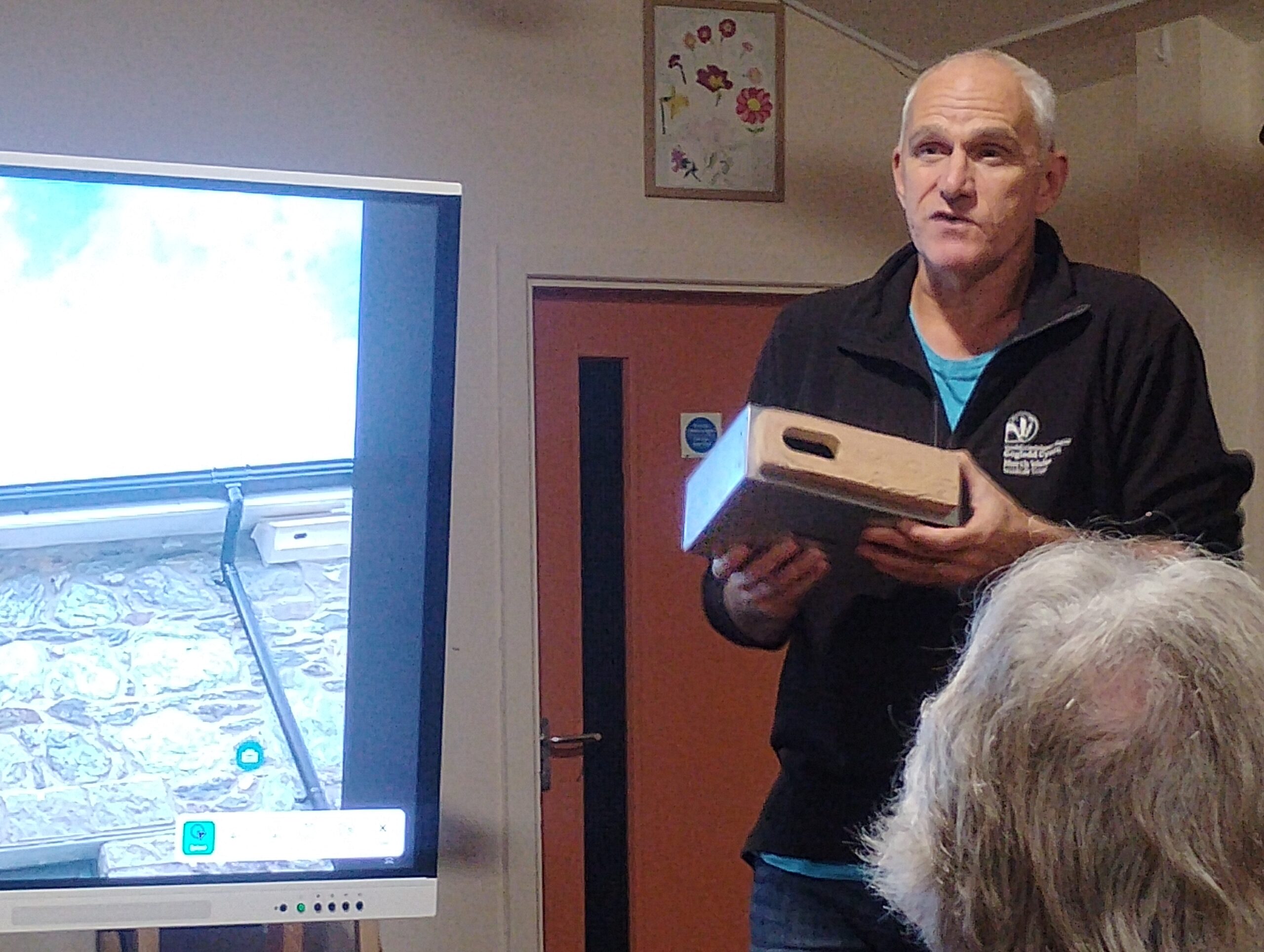
On Saturday 24 October, more than 30 people, including members of the newly formed Porthmadog Swift Group, braved Storm Boelo to attend our Swift Awareness talk at Canolfan Prenteg. Ben Stammers, Swift Project Officer (North Wales Wildlife Trust) gave us a fascinating, passionate and emotive talk about the lives and ecology of Swifts, the fastest declining bird species in Wales. They have declined by 76% since 1995.
We learnt that swifts have evolved to spend almost their entire lives on the wing. Once they fledge from their nest holes they will not land again until they are ready to find their own nest and breed at around two to three years old. But there are many challenges facing these remarkable migratory birds and these are the primary reasons for their decline.
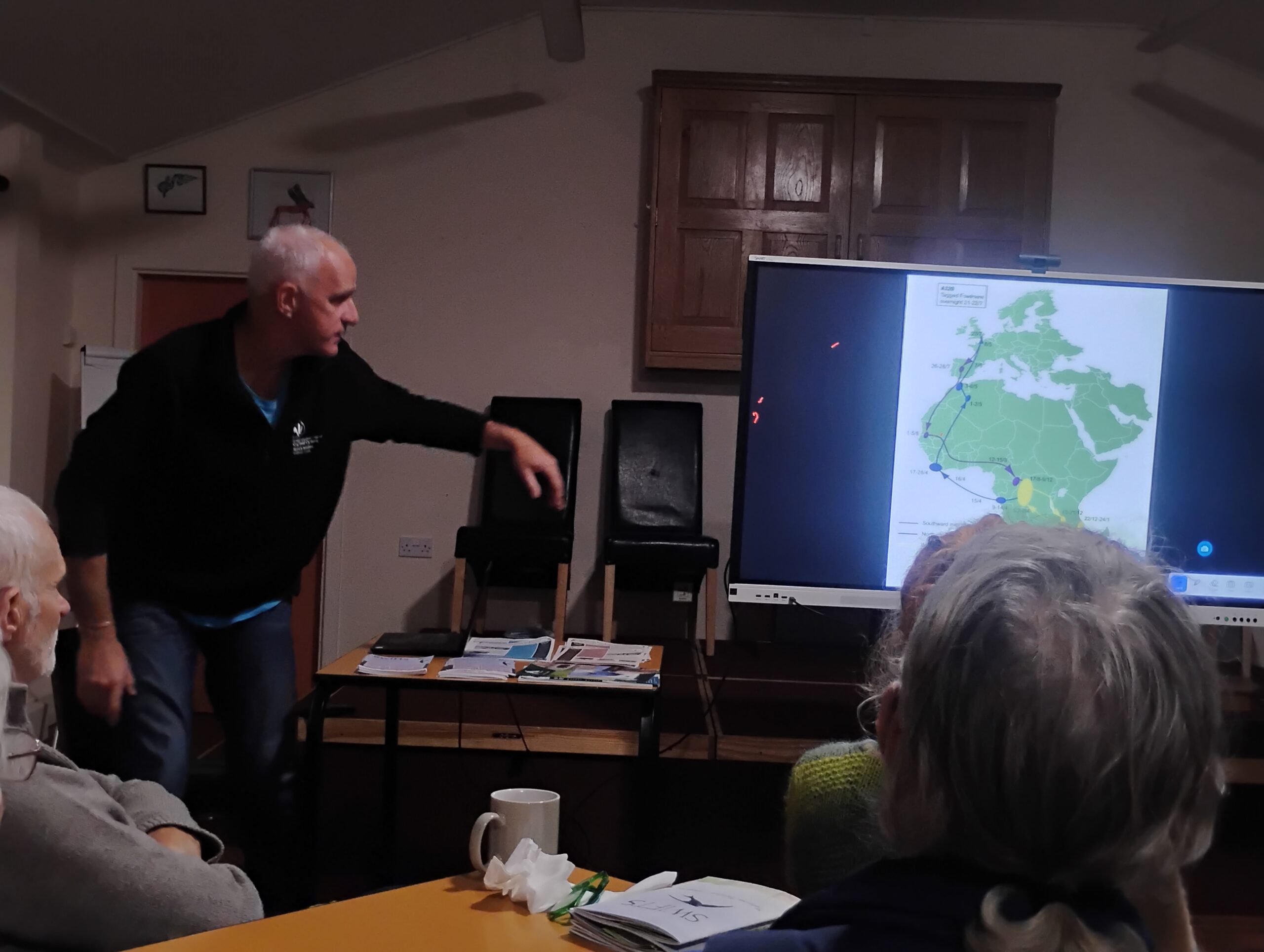
Swifts traditionally nest in building eaves, cavities, and older structures. Modern construction and renovations often remove these crevices, leaving few suitable nesting locations. As they are highly site-faithful, returning to the same nest each year, this loss of nesting sites has a severe impact on their populations.
Swifts are insectivores, feeding almost exclusively on flying insects. Over the years widespread use of pesticides, habitat loss, and pollution have significantly reduced insect numbers, limiting the swifts’ food supply to feed themselves and their offspring.
Shifts in weather patterns and climate change affect insect emergence and availability, disrupting the timing of food supply for swifts and reducing foraging opportunities.
The first sounds of Swifts screaming above our gardens at the beginning of May lets us know that summer has begun, but it is a sound that is becoming rare in many villages, towns and cities. However, there are many ways that we can give them a helping hand and assist their recovery:
- Consider putting a Swift Box on your house or add a Swift brick in a suitable cavity.
- Join your local Swift Conservation Group or conduct your own self-guided Swift survey.
- Encourage insects by growing pollinating plants or create a wildlife pond.
- Avoid using insecticides.
Ben had brought a range of different swift nest boxes with him, and he emphasised the importance of choosing the correct type of nest box, a suitable building and appropriate location.
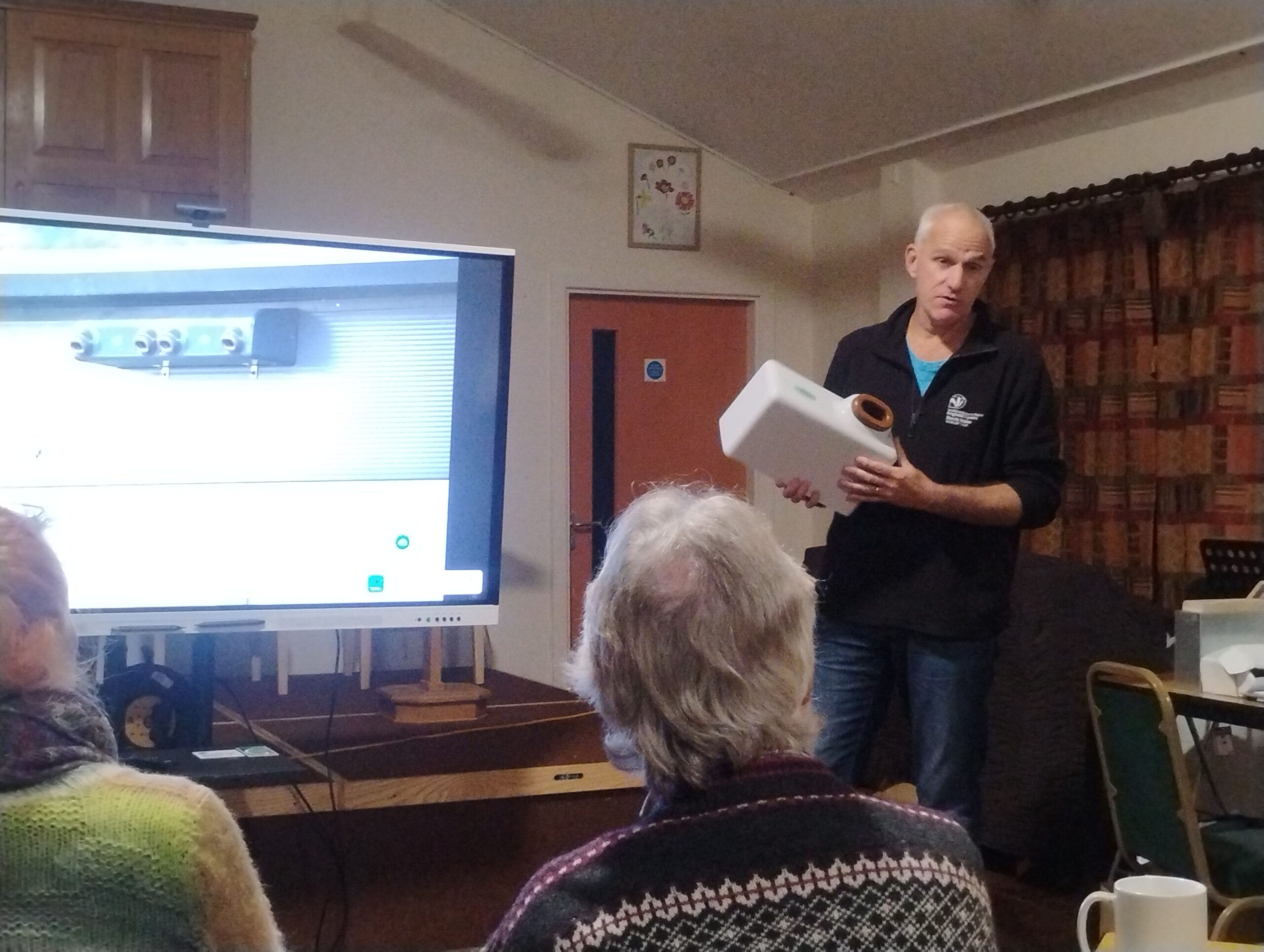
To support the Swift Awareness project, Bywyd Gwyllt Glaslyn Wildlife has allocated funds to purchase swift nest boxes and call alarms to be installed in the Glaslyn Valley. It you live locally and are interested in having a swift next box on your property, please contact info@glaslynwildlife.co.uk for a request form. Hopefully the boxes will provide much-needed nesting sites when the swifts return to the valley next spring.